
2013 marks Lavery’s centennial. As with all success stories, ours starts from humble beginnings. More precisely in Québec City where two enterprising young lawyers, Onésime Gagnon and Maurice Dupré, laid the foundation stone of a structure that was to become a few decades later Québec’s leading independent law firm.
During the last 100 years, our firm had its share of momentous events that helped Lavery reach beyond insurance law, which had been for a long time our bread and butter. Likewise, we have enlarged the scope of services provided to increasingly demanding and sophisticated clients. Throughout the last century, Lavery was redefined by generations of pioneers with vision who foresaw emerging trends in the legal services market and made the right decisions to maximize growth and ensure the firm’s future.
Among the major law firms in Québec, Lavery has always been renowned for its leading litigators who have argued numerous precedent-setting and famous cases. In the legal community, Lavery is considered “a seedbed of judges” since many of our former partners have been appointed to the bench. This well-deserved reputation cannot be explained solely by the great number of litigators who practised at the firm. It also has to do with the fact that, in the firm’s history, each generation of lawyers was determined to transfer their knowledge to the succeeding generation.
In addition to maintaining its litigation practice, Lavery has constantly reinvented itself by offering its clients a wider range of services in areas of practice such as labour and employment law, administrative law and business law. The decision to grow our business law practice enabled Lavery to execute prestigious mandates which in turn reinforced our brand.
Our illustrious predecessors would be proud to see that the structure, which was patiently built stone by stone over the years, stands out in the Québec legal landscape. One of the firm’s most rewarding accomplishments is to have been able to preserve and pass on the values that have shaped our identity in the last century: human qualities, professional expertise, respect, innovation and training. Once these values are combined, something essential becomes visible to the eye: Lavery has a soul.
2018
Goudreau Gage Dubuc (GGD), one of the leading intellectual property firms in Canada, joins Lavery.
2014
In March 2014, close to a hundred lawyers, notaries and employees from the Montreal, Sherbrooke and Trois-Rivières offices of Heenan Blaikie join Lavery.
2013
Lavery celebrates its 100th anniversary
2007
On October 1st a group of 34 lawyers specialized in business law join Lavery, de Billy from the firm Desjardins Ducharme.
Lavery, de Billy
1991
The Quebec City firm Gagnon, de Billy, Cantin, Beaudoin, Lesage & Associés merges with the Montreal firm Lavery O’Brien to become Lavery, de Billy.
Lavery O’Brien (Montreal)
1979
The firm Lavery O’Brien is founded.
1949
Tansey, de Grandpré and de Grandpré is founded in 1949. Claude Lavery joins the firm in the 1960s.
1926
Audette and Lorrain found their firm in Montreal. A year later, John L. O’Brien joins the firm.
Gagnon, de Billy, Cantin, Beaudoin, Lesage & Associés (Quebec)
1990
The firm becomes Gagnon, de Billy, Cantin, Beaudoin, Lesage & Associés at the beginning of the 1990s.
1931
Valmore de Billy joins the firm.
1913
Dupré and Gagnon found their firm in Quebec City.
MILESTONES
Founding of Dupré & Gagnon in Québec City – 1913
In 1913, two young lawyers both aged 25, Maurice Dupré and Onésime Gagnon, found the firm of Dupré & Gagnon in Québec City. They both go into federal politics in 1930. Their second career is so demanding that, in 1931, they hire another experienced lawyer, Valmore de Billy, to help run the firm. In the following years, De Billy plays a key role in the Desjardins Movement, particularly in the creation of the Société d’assurance des caisses populaires, in 1944, and Assurance-vie Desjardins, in 1948.
Sadly, Maurice Dupré dies tragically in a train derailment in 1941. As for Onésime Gagnon, he goes on to have a remarkable career in provincial politics in the government of premier Maurice Duplessis. From 1936 to 1956, he is elected, without interruption, as the member for the riding of Matane, accumulating a total of six consecutive mandates. During this time, he holds several ministerial portfolios, including provincial Treasurer, from 1944 to 1951, and Finance Minister, from 1951 – when the provincial Treasury becomes the Ministry of Finance – to 1958. In the same year, he is appointed as Lieutenant Governor of Québec.
In 1945, Valmore de Billy urges his son Jacques, who is in England at the time as an officer in the Canadian Army, to return to Canada in order to help him with the firm after the war. The arrival of Jacques de Billy gives the firm a sustained boost, especially in insurance law. Over the years, the members of two large families of lawyers, i.e. the Gagnons (Onésime, his sons André and Claude, and Claude’s son, Pierre-C.) and the de Billys (Valmore and his sons Jacques and Gilles), among others, practise in succession with the firm.
Arrival of John L. O'Brien at Audette & Lorrain in Montréal – 1927
In 1927, John L. O’Brien, a young lawyer aged 28, of Irish origin, joins the firm of Audette & Lorrain, founded the year before in Montréal. After the two founders leave, O’Brien has such an enduring impact on the firm's development that, for nearly 65 years from 1927 to 1991, his name remains an integral part of the firm name. With his connections in the business sector, he succeeds in building an impressive commercial clientele, including such prestigious names as Canadian Pacific, Bell Canada and Reader’s Digest.
Over time, under John O’Brien's astute leadership, the firm recruits a number of highly talented lawyers capable of consistently meeting clients' expectations with their extensive knowledge of the law and remarkable skills as litigators. Several of these lawyers are subsequently appointed to the judiciary at various levels of the justice system, notably the Superior Court of Québec, the Québec Court of Appeal and the Supreme Court of Canada.
Founding of Tansey, de Grandpré & de Grandpré in Montréal – 1949
In 1949, Harold Tansey, Louis-Philippe de Grandpré and A. Jean de Grandpré found the firm of Tansey, de Grandpré & de Grandpré, which, historically speaking, is the second Montréal branch of Lavery. The firm specializes in insurance, particularly auto insurance, while not restricting itself to this sector. Clients flock to the firm. This phenomenon is not only attributable to the quality of the lawyers practising there and the quality of their services, but the fact that the firm’s three founding members are a perfect professional match for each other.
Thus, Louis-Philippe de Grandpré enjoys a formidable reputation as a jurist, later earning himself an appointment to the Supreme Court of Canada. Harold Tansey is an outstanding litigator with an engaging personality that enables him to excel in the context of jury trials in civil cases. As for Jean de Grandpré, he has a more general practice including business law and some labour law. In 1966, Jean de Grandpré leaves the firm to join Bell Canada as the head of its legal department. In the same year, the firm recruits Claude Lavery, who subsequently develops the firm’s enviable reputation in labour law.
Merger of the firm’s two Montréal branches to create Lavery, O'Brien – 1979
In 1979, the firm’s two Montréal branches merge, creating Lavery, O’Brien. This business decision proves beneficial for both parties. The merger allows the new firm to consolidate its areas of practice, particularly in business law, insurance law and labour law.
Apart from those sectors, the firm also makes a name for itself in other areas for the benefit of its clients. Thus, in the 1980’s, Michel Yergeau founds the firm's environmental law group, making Lavery, O’Brien the first law firm with such a practice in Canada. Also, during the same decade, Raymond Doray contributes to the development of a new practice: the right to information and the protection of personal information. In addition, the firm’s well-established practice in insurance law is diversified to include new areas such as manufacture’s, professional and medical liability.
Merger of Lavery, O'Brien in Montréal with Gagnon, de Billy, Cantin, Beaudoin, Lesage & Associates in Québec City – 1991
In 1991, Lavery, O’Brien, in Montréal, merges with the firm of Gagnon, de Billy, Cantin, Beaudoin, Lesage & Associates in Québec City. This historic transaction is negotiated with aplomb by André Laurin and Robert W. Mason for the Montréal offices and by Pierre Beaudoin and Pierre Cantin for the Québec City offices.
The Montréal-Québec City merger in 1991 is a natural fit. Indeed, the two firms’ have much in common, since both have significant business, insurance and labour law practices. Both firms’ management structures are similar and their firm cultures are comparable. Both firms also have top-notch jurists and litigators who are highly educated and respected by the courts and the legal system as a whole. For the Montréal component, the merger gives the new firm of Lavery, de Billy a strong presence in the old capital of Québec City and in eastern Québec, and enhances its appeal to the government sector. For the Québec City component, the merger is an opportunity to expand its reach and exposure to the rest of Canada and elsewhere in the world, as well as the range of legal services offered to its clients.
34 lawyers and 60 staff members from the Montréal offices of Desjardins Ducharme join Lavery – 2007
In October 2007, 34 lawyers and about 60 staff members from the Montréal offices of the firm of Desjardins Ducharme join Lavery. This reinforces the firm’s practice sectors in commercial litigation and business law. The simultaneous integration of nearly 100 people creates significant logistical difficulties that are, however, swiftly and skilfully resolved by the directors of the firm’s various administrative services and their staff.
This major transaction is negotiated by Rick Dolan, Élise Poisson and Jean-François Hotte for Lavery, and by André Vautour, Gérard Coulombe and Jean Legault for Desjardins Ducharme. The combination in 2007 represents a further step in the strategic shift undertaken by Lavery in the early 2000’s to strengthen its business law practice so as to take full advantage of the opportunities available in Canada and around the world. The firm is now in a better position to carry out various transactional mandates, particularly in mergers and acquisitions, securities law and private placements.
100 lawyers, notaries and staff members from Heenan Blaikie join Lavery – 2014
In March 2014, 45 lawyers and about 50 notaries and staff from the Montréal, Sherbrooke and Trois-Rivières offices of the firm of Heenan Blaikie join Lavery.
The arrival of these professionals contributes to making Lavery the top-ranked regional firm in Québec and strengthens its position as a leader of the business community both inside and outside Québec, particularly in the key practice areas of business law, labour and employment law, and litigation.
40 professionals from Goudreau Gage Dubuc (GGD), one of the largest intellectual property firms in Canada, join Lavery – 2018
This combination, in 2018, consolidates the multidisciplinary approach of Lavery – the largest independent law firm in Québec – by merging the firm's high-quality legal services with the expertise of GGD's lawyers and patent and trademark agents dedicated to intellectual property law. Thus, Lavery continues to pursue its growth and further strengthens its reputation as one of the most respected legal teams in the country.
THE BUILDERS
ONÉSIME GAGNON
 Onésime Gagnon, the firm’s founding father, felt an early calling to politics. He began his political career in 1930 at the federal level with the Conservative Party of Canada. He then moved to provincial politics in Québec in 1933. That same year, he courageously squared off against Maurice Duplessis at the Quebec Conservative Party’s leadership convention, with Duplessis emerging victorious as the party’s leader. There were no hard feelings between the two, and in 1935, Duplessis appointed Gagnon to the committee overseeing the merger between the Quebec Conservative Party and the Action libérale nationale. This merger resulted in the creation of the Union nationale and shows that Lavery’s history of mergers goes back a long way!
During the Duplessis years, Gagnon was given increasing responsibility as the head of different departments. He even held the prestigious position of Provincial Treasurer (Minister of Finance beginning in 1951) for 14 consecutive years, until he was appointed Lieutenant Governor in 1958. Gagnon is the great-grandson of Alexis Godbout, who was elected as a member of the Parti patriote in 1834. Godbout’s term ended suddenly on March 27, 1838, with the suspension of the Constitutional Act of 1791, following the failed Patriotes Rebellion.
JOHN L. O'BRIEN
 John L. O’Brien graduated from McGill University and was admitted to the Barreau du Québec in 1924. He was not only an eminent legal expert but also a shrewd businessman. He quickly became the head of the firm, which he had joined in 1927. He developed an impressive network of contacts and gained the loyalty of a growing number of important commercial clients. This enabled him to hire young and talented new lawyers. Even while appearing before various courts and sitting on several boards of directors, John O’Brien found the time to serve as president of both the Bar of Montréal and the Barreau du Québec in 1963–64.
O’Brien was devoted to training young jurists and sharing his knowledge with them. He was a law professor at McGill University and mentored numerous lawyers at the firm. Many individuals, including politicians, turned to him for advice. In 1966, at the express request of the Canadian Prime Minister, Lester B. Pearson, O’Brien was appointed legal counsel for the Spence Commission, which was charged with investigating the scandalous Munsinger Affair, named after the alleged Soviet spy who is said to have had intimate relations with certain ministers in the Diefenbaker government.
JACQUES DE BILLY
 Jacques de Billy was an eminent scholar and an experienced litigator with a thorough grasp of jurisprudence. He joined the firm in Québec City in 1938. Soon after, he began studying common law at Toronto’s Osgoode Hall Law School. He then volunteered for the Canadian Army during the Second World War and earned the officer’s rank of captain. In the summer of 1945, he returned to the firm, which saw incredible growth under his leadership, mainly in the area of civil liability in insurance matters.
Jacques de Billy sat on the boards of directors of several Anglophone companies, including the Toronto- Dominion Bank and Shell Canada: at the time, this was exceedingly rare for a Francophone. He also authored documents for the 1964 incorporation of the Universitas Foundation of Canada, a non-profit organization that sells registered education savings plans and is still an important client of the firm today. While an officer in the Canadian Army, “Mr. Jacques” befriended officers from Toronto, some of whom held important positions after the war at insurance companies headquartered in Toronto. When an insurance matter required legal services in Québec City, the response from Toronto was always, “Call Jacques de Billy!”
LOUIS-PHILIPPE DE GRANDPRÉ AND A. JEAN DE GRANDPRÉ
These two key builders of the firm had remarkable careers: one reached the height of the legal profession, and the other, the height of the business world.
 Louis-Philippe de Grandpré, admitted to the Barreau du Québec in 1938, was the epitome of a great jurist: he had exhaustive knowledge of the law and of jurisprudence, a keen sense of conciseness and strong academic rigour. A Companion of the Order of Canada and a Grand Officer of the Ordre national du Québec, he was heavily involved in his profession. He was the president of both the Bar of Montreal and the Barreau du Québec as well as the president of the Canadian Bar Association. In 1974, he became a judge of the Supreme Court of Canada. “Mr. Philippe” had a reputation as an austere and stern man with strong convictions and a caustic wit. Nevertheless, the door to his office was always open, and he made himself available to his colleagues at the firm, who saw him as an invaluable resource, especially the younger ones. For almost 25 years, he was an important contributor to the training of his younger colleagues, in terms of both legal and company culture.
 Jean de Grandpré excelled at his law studies at McGill University and graduated first in his class in 1943. Soon after, he founded Tansey, de Grandpré & de Grandpré together with his brother Louis-Philippe and Harold Tansey. A sharp legal mind and talented litigator, Jean de Grandpré also had an innate sense for business. In fact, his practice was made up of many commercial clients. One day, Bell Canada contacted John O’Brien about a major communications case. O’Brien, who felt he was unable to take on the case, referred Bell to Jean de Grandpré. This is how Bell Canada became one of de Grandpré’s main clients. After joining Bell Canada as its chief legal officer in 1966, Jean de Grandpré quickly rose to the top and, 10 years later, became the company’s Board of Directors’ Chair and CEO. He was the driving force behind the 1983 creation of Bell Canada Enterprises (BCE), which under his direction became Canada’s largest communications company.
J. VINCENT O'DONNELL
 Vincent O’Donnell joined Tansey, de Grandpré & de Grandpré in 1957, where he quickly made his mark as a litigator, working mainly in insurance law, professional liability and, later, class actions. He served as the president of the Bar of Montréal, and his active involvement in his profession has been recognized with several distinctions, including the Barreau du Québec Medal.
Litigation undertaken by Vincent O’Donnell has contributed to jurisprudence, and he was the firm’s leading counsel in several major cases, including the Bre-X affair. That case dealt with the report of a major gold deposit in Indonesia. When the massive fraud involved was exposed in 1997, Lavery put together a team headed by O’Donnell, which successfully represented SNC-Lavalin in numerous class actions filed against the company in Canada, in the US and elsewhere in the world. As a young member of the firm, Vincent O’Donnell had developed a friendship with Elizabeth Monk; when Louis-Philippe de Grandpré was appointed to the Supreme Court, he gave O’Donnell Monk’s wooden desk, which O’Donnell still has and cherishes today.
ELIZABETH C. MONK
 Born in Montreal in 1898, Elizabeth Monk was a brilliant student and graduated with a degree in law from McGill University in 1923. At the time, the Barreau du Québec did not admit women, so she became a member of the Nova Scotia Barristers’ Society in 1934. On April 29, 1941, women were finally granted the right to practise law in Québec. January 1942 saw the first two women pass the Barreau’s examinations: Suzanne Raymond Fillion, who never practised, and Elizabeth Monk, who was the first woman to practise law in Québec, thus opening the door to the legal profession for women.
In 1966, at the invitation of Louis- Philippe de Grandpré, Elizabeth Monk joined the firm. She practised until 1980, mainly in corporate and real estate law. She never appeared before the courts, no doubt because of her legendary discretion; instead, she made her mark through her role as legal counsel for major corporations that worked mainly in mining. Monk also played a key role in women’s rights, in particular in terms of suffrage and gaining admission to the Barreau. She was the legal counsel for the League for Women’s Rights, created in 1929 by Thérèse Casgrain. She wrote many speeches and prepared numerous documents for Québec’s suffragettes—all behind the scenes, as she preferred it.
CLAUDE LAVERY
 In the late 1940s, after studying law at the Université de Montréal, and later at McGill University, Claude Lavery devoted his career to labour law. From 1952 to 1960, he was the secretary-general of the Association professionnelle des industriels, a group made up of employers. From 1960 to 1966, he was the vice-president of the Commission des relations ouvrières, which in 1964 became the Commission des relations du travail. In 1966, through his friends Amédée Monet and Anthime Bergeron, who were lawyers at Tansey, de Grandpré, Bergeron & Monet, Lavery was recruited by the firm to strengthen its labour law practice.
Supported by young lawyers whose desire it was to best represent clients’ interests, Claude Lavery developed a strong reputation in labour law for the firm. In particular, he provided counsel to the city of Laval during the important amalgamation of its 14 municipalities. In the 1960s and 1970s, when labour relations in Québec were tense, he advised clients such as Desjardins and Société des alcools du Québec (SAQ) in labour disputes. Although he represented employers, Lavery was highly esteemed by union leaders, because, as was the firm’s practice, he always kept his word. In one instance, when negotiations were stalled with the SAQ, the president of the employee union said, “Bring us Claude Lavery, and everything will be settled!”
ROBERT W. MASON
 Robert Mason joined the firm in 1965 and stayed here almost 50 years, which made him the firm’s most senior member. Over the course of his long career, he has litigated many cases for numerous clients. His most memorable work is undoubtedly the 1980s ureaformaldehyde foam insulation (UFFI) case, in which he represented the product’s manufacturer. The case was highly publicized and, at the time, was the longest civil proceeding in Canadian history—a fact that made it into The Guinness Book of Records! In December 1991, Lavery successfully represented its client before the Superior Court, and in October 1995, the Court of Appeal refused to overturn the trial judge’s decision.
In 1979, Robert Mason became the firm’s first Managing Partner, following the merger between Lavery and O’Brien, in which he played a key role. He and André Laurin were also negotiators for the firm in the 1991 merger with the Québec City practice that gave rise to Lavery, de Billy. Robert Mason was also the driving force behind developing lasting business relationships between Lavery and other firms in Canada.
PIERRE CANTIN
 After serving as the assistant secretary for legal affairs at the Bank of Montreal, Pierre Cantin joined the firm in Québec City in 1969. Under the able wing of Jacques de Billy, he became a tremendous litigator whose expertise lay in working with experts’ reports, in crossexamination and in preparing witnesses. Throughout his long career he has been involved in over 700 cases, appearing before all levels of court in Canada, that is, from the Superior Court of Québec to the Supreme Court of Canada.
A member of the American College of Trial Lawyers, he stood out particularly in the areas of insurance and civil liability. He has worked on many cases, several of which have been highly publicized, including the case in Chapais, a small town in Northern Québec, in which a fire destroyed a community hall on New Year’s Eve leading into 1980. Pierre Cantin represented the event organizer, the Chapais Lions Club, which was insured by Royal Insurance.
PIERRE BEAUDOIN
 Admitted to the Barreau du Québec in 1965, Pierre Beaudoin joined the firm in Québec City on January 1, 1970. He started by working mainly in labour and administrative law, appearing before various judicial, quasi-judicial and administrative bodies, including the Supreme Court of Canada. Later, his practice grew to include construction, transportation, real estate and health law. In the health field, he represented Hôpital Laval, located in Québec City, in a case against a group of the hospital’s cardiologists. The case, which determined department heads’ scope of power, was precedent-setting and had a lasting impact on the entire Québec health network.
A member of the prestigious American College of Trial Lawyers, which has recognized his excellence as a litigator, Pierre Beaudoin, working with his colleague Pierre Cantin, was also a major player in the merger between the Québec City and Montréal firms that led to the creation of Lavery, de Billy. His talents as a negotiator were a key factor behind this new chapter in the firm’s history.
ANDRÉ LAURIN
 André Laurin joined the firm in the early 1970s and gradually built a diversified practice in business law, with commercial clients of all sizes, from multinationals to SMEs. Even before corporate governance was an essential issue for companies, André Laurin had acquired in-depth knowledge of all things related, including directors’ and officers’ liability, risk management as well as ethics and conduct issues.
André Laurin was Chairman of the Board from 1988 to 1992 and the firm’s Managing Partner from 1992 to 2000. He contributed to modernizing the firm’s management structure, to placing greater emphasis on professional development and to updating the firm’s IT services. He has always favoured a multidisciplinary approach to the range of services the firm offers its clients, and he has successfully targeted areas with a high potential for growth in business law, especially taxation and real estate law.
MICHEL YERGEAU
 After several years at another law firm, Michel Yergeau turned his career toward environmental law. In 1979, he became the first Vice-President of the newly created Bureau d’audiences publiques sur l’environnement (BAPE), where he would stay until 1984. During that time, he acquired extensive expertise in this emerging practice area. He was hired by Lavery in 1985, where he was given the means to create Canada’s first environmental law team in a private firm.
Yergeau is the author of a work that is considered seminal in the field. He represented clients that included Hydro-Québec and Noranda Minerals in numerous precedent-setting cases in this new area of practice. At Lavery, Yergeau put together Québec’s largest environmental law group. In addition to the environmental law cases he litigated before various courts, Michel Yergeau was also the Chair of Lavery’s Board from 1996 to 2009. He also worked closely with Rick Dolan to strengthen Lavery’s business law practice. He was appointed Justice of the Superior Court of Québec on May 31, 2012.
RICHARD F. DOLAN
 In 1979, Richard (“Rick”) Dolan was hired as a lawyer at the newly merged firm Lavery, O’Brien. Practising in business law, he represented a range of clients in commercial transactions, in particular mergers and acquisitions. In 1996, he left the firm to join the engineering company SNC-Lavalin, where he served as the Senior Vice-President of the Legal Department and General Counsel. He rejoined the firm in 2000 and succeeded André Laurin as Managing Partner.
Rick Dolan contributed to the adoption of a strategic plan that focused on business law to bolster Lavery’s presence in the area while carefully considering economic developments and the increasing internationalization of transactions, such as those made by the firm’s clients. In 2009, through Dolan’s work, the firm was retained to represent the investors group led by the Molson brothers in acquiring the Montréal Canadiens, the Bell Centre and related companies owned by the Gillett family. Under Dolan’s leadership, Lavery reinforced its reputation as a leading firm in Québec and the rest of Canada.
ÉLISE POISSON
 Élise Poisson was Managing Partner of the firm from 2010 to 2012. During her term, she led a large team at Lavery in major renovations of the firm’s Montréal office at Place Ville Marie. The new space offers the firm’s lawyers and employees an optimal work environment. This includes a conference centre equipped with the latest technologies, which has promoted more client meetings and helped strengthen Lavery’s corporate identity.
Gérard Coulombe
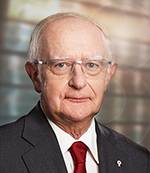 Gérard Coulombe joined Lavery in October 2007, along with 34 other lawyers from Desjardins Ducharme where he practised for some thirty years. He was known to all, and recognized by the stalwarts of the business world. Over the span of a career that was as prolific as it was inspiring (click here to know more), Mr. Coulombe earned a more than enviable reputation in Québec and throughout Canada, where his name is synonymous with integrity, competence and hard work.
In addition to the legal profession, which he practised for nearly five decades, Mr. Coulombe sat on many boards of directors, including, in particular, that of the National Bank of Canada for slightly over 20 years. At the time of his passing, he was still a director of Club de Hockey Canadien inc., National Bank Group Inc., National Bank Trust Inc., Casavant Frères, S.E.C., Fonds de solidarité FTQ and National Bank Funds Corporation. He was also a trustee of the Cominar Real Estate Investment Trust and had been appointed Lead Trustee of the Board of Trustees of this Fund in May 2016. He was appointed Queen’s Counsel in 1992 and received the distinction of Lawyer Emeritus (Ad.E.) in 2013.