
The theme for this year’s World Intellectual Property Day is “IP and Sports: Ready, Set, Innovate”, celebrating IP’s contributions to the world of athletics, athletes, and fans alike.
It may seem surprising, but the world of IP has always been strongly linked to sports, whether it be cutting-edge equipment and gear, or the latest trends and brands in apparel. In honour of this year’s theme, we at Lavery thought it would be fun to highlight various sports-related inventions that have been patented over the years. From the serious to the downright silly, we have chosen several patents that show IP’s important, and sometimes bizarre, contributions to sports and athletics.
US 2642679A: Ice rink resurfacing machine
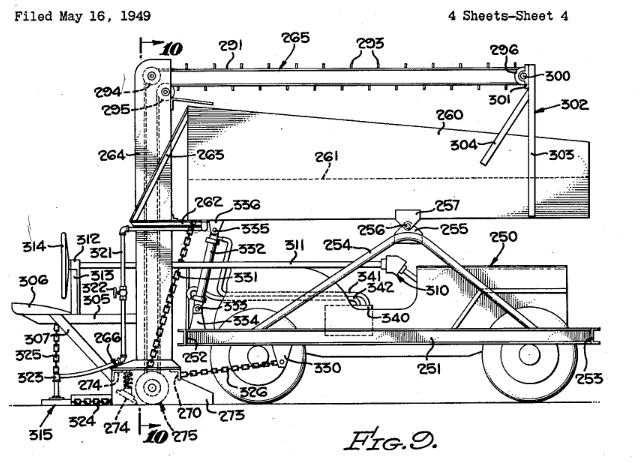
Starting with a classic, Frank J. Zamboni’s 1949 patent for an “Ice rink resurfacing machine” is recognizable to anyone who’s ever attended a hockey game. Fun fact: between 1928 and 1978, Frank Zamboni was awarded a total of 15 patents related to ice resurfacing machines as well as other technologies.1
US 267799A: Cork swimming-suit
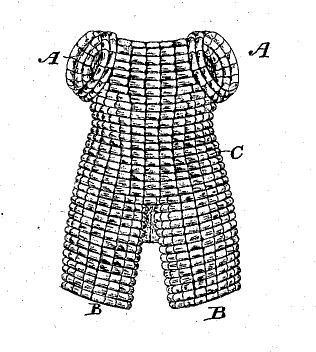
Before there were swimsuits made of space-age materials featuring ultra-hydrodynamic designs, we apparently had swimsuits made of… cork? Patented by Paschal Plant in 1882, this suit was intended to be sufficiently buoyant so as to “enable a person to float with perfect security” and aid in coming up to the surface after a dive.
Water safety has never been so fashionable!
US6446264B2: Articles of clothing
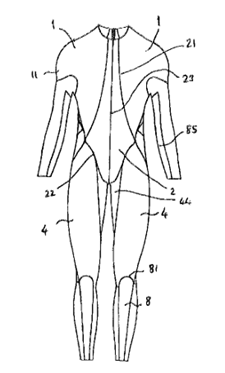
Fast forward 120 years to see how far swimwear innovation has advanced. The use of such “tech suits” correlated with the breaking of numerous swimming world records when introduced, emphasizing the real impact of innovation.
US2662587A: Chair for aerial skilifts
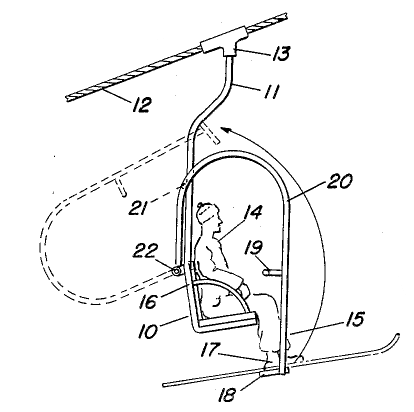
While modern ski lift technology has existed since the 1930s, Mcilvaine Alexander’s 1949 patent was the first to feature a retractable footrest that could be brought by the passenger into operating position during loading, thereby no longer requiring as much help from attendants.2
US642544A: Bicycle
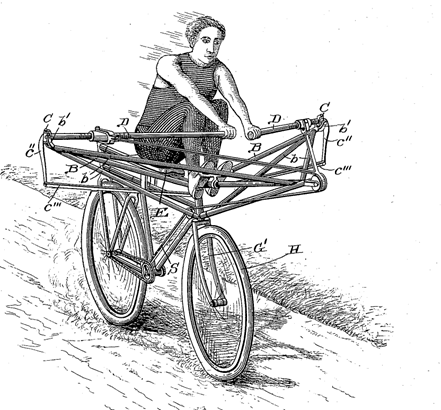
Patented by Louis S. Burbank in 1898, this “innovative” bicycle design is intended to “provide means whereby one may enjoy with a bicycle or similar vehicle exercise like that of rowing” and is “adapted to develop the muscles of the arms and body as well as those of the legs”.
Looking at the image above, many questions arise, for example relating to starting, staying upright, and stopping.
US638920A: Golf-tee
According to the National Golf Foundation, at least 22,000 patents related in some way to golf were filed with the U.S. Patent and Trademark Office (USPTO) between 1976 and 2018, the most of any sport by far.3 For comparison, baseball, the second most patented sport, saw 1,508 patents filed in the same period.
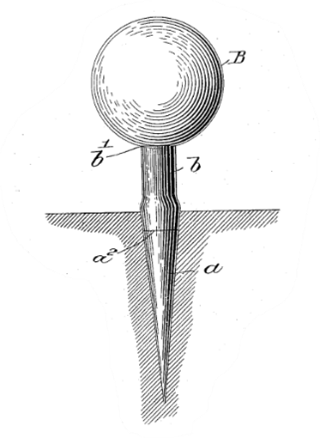
An early example of a golf-related patent is this one for a “wooden” golf tee, patented by George F. Grant in 1899. According to the patent, the wooden golf tee was intended to replace “the usual conical mounds of sand or similar material formed by the fingers of the player on which the ball is supported when driving off”.
US12011645B2: Golf tee
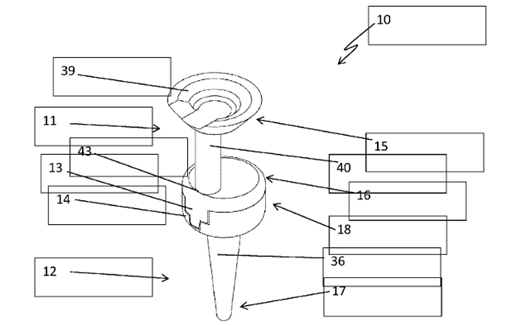
Some 135 years later and golf tee innovation continues, in this case with a two-part design in which the upper portion can move and/or detach from the lower portion when the ball is struck, minimizing any resistance from the tee.
US5356330A: Apparatus for simulating a "high five"
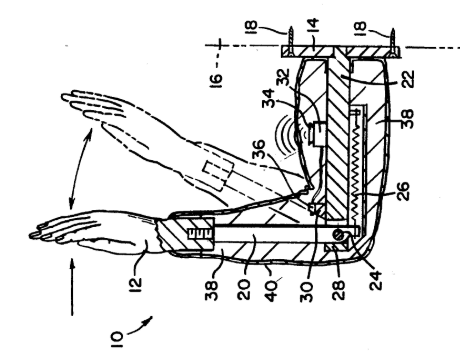
When looking at technical achievements in sports, one can’t overlook the crowds of adoring fans. With that said, this invention relates to a self-righting hand-arm configuration, which is adapted to pivot when struck by a user, thereby simulating a "high five". According to the patent, solitary fans are, tragically, “unable to perform a ‘high five’ to express excitement during a televised sporting event”, making this invention nothing short of miraculous for such individuals. Other features of this invention include a “miniaturized, battery operated sound generator and speaker, for outputting a predetermined or user selectable sound in response to the striking of the simulated hand”. These sounds can include the “the cheer of a crowd or the voice of a specific player”.
US1718305A: Basket ball
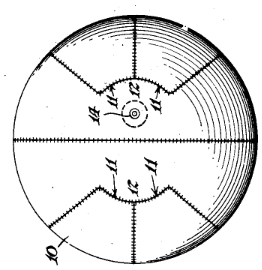
Patented by George L. Pierce in 1928, this invention changed the look of basketballs to something more closely resembling their modern-day counterparts. According to the patent, basketballs had previously been made with panels tapering down to narrow points. This invention ensured a properly balanced basketball in which the best portions of the hide were saved and used in the pole portions of the ball.
It is worth noting that basketballs were actually a dark brown until the late 1950s. The iconic orange colour we recognize today was initially selected by basketball coach Tony Hinkle, who thought it would be easier for fans to see.4
And there you have it, several sports-related patents, which—while not all game-changers—hopefully illustrated IP’s longstanding and far-reaching relationship with the world of athletics. It remains to be seen what wondrous (and wacky) inventions the future holds.